 By Carissa Ockey, Designer Design Trends
Modern Farmhouse Homes in Middle Tennessee: A Design Guide for Your Custom Build
If you've driven through the rolling hills of Montgomery County lately, you've noticed it: board-and-batten gables, black-framed windows, deep front porches, and that blend of rustic warmth and clean, modern lines. Modern farmhouse has become one of the most requested styles for new custom homes in Clarksville and across Middle Tennessee — and for good reason. It delivers timeless curb appeal, a connection to the land, and interiors built for the way families actually live.
It's a style we build often, and the difference between a modern farmhouse that looks great for decades and one that looks tired in five years comes down to a handful of decisions most design inspiration posts never mention. Here's what defines the style, what it looks like in a real plan, and which materials and details hold up in Middle Tennessee's climate.
What Defines Modern Farmhouse Design?
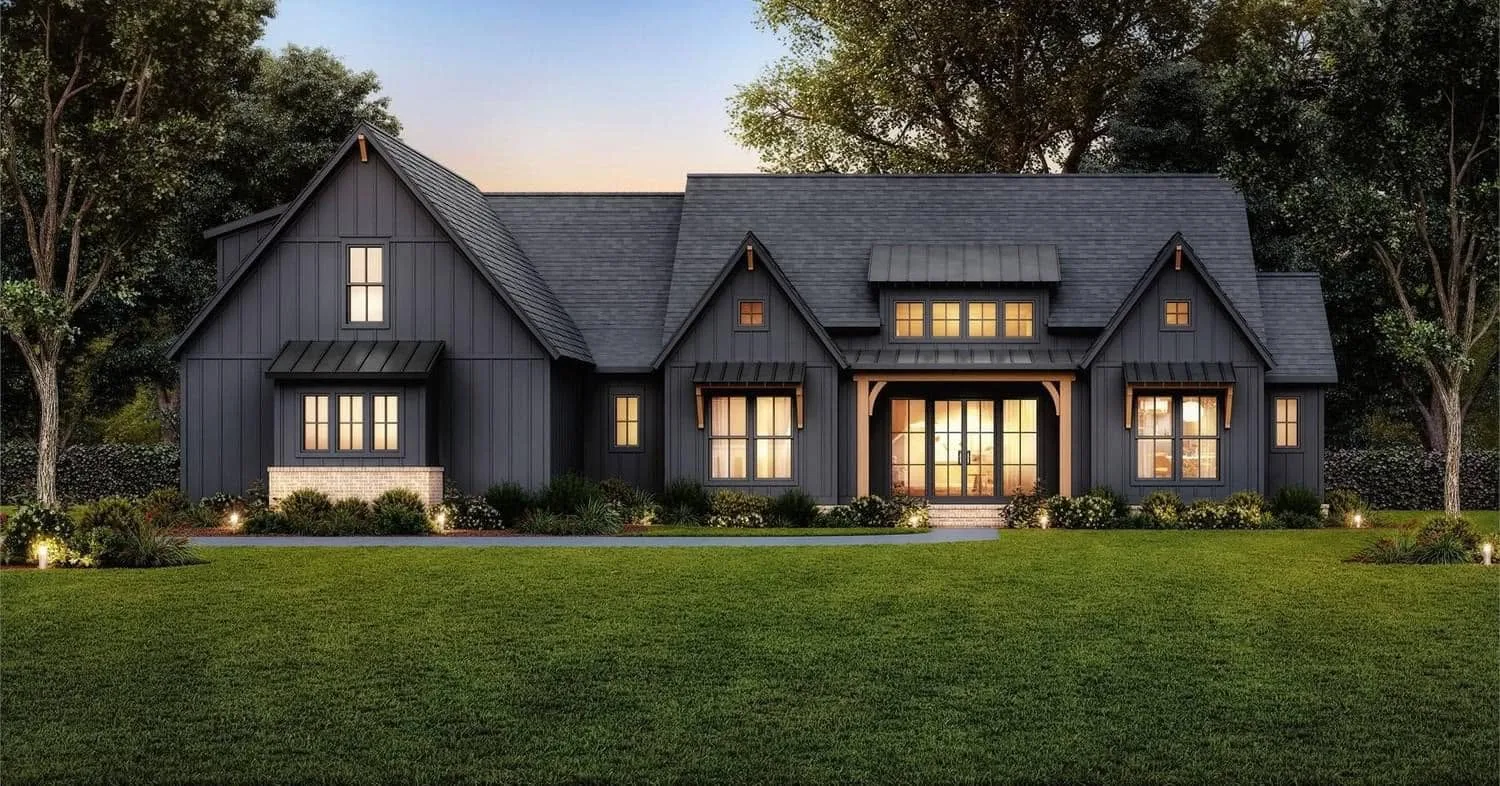
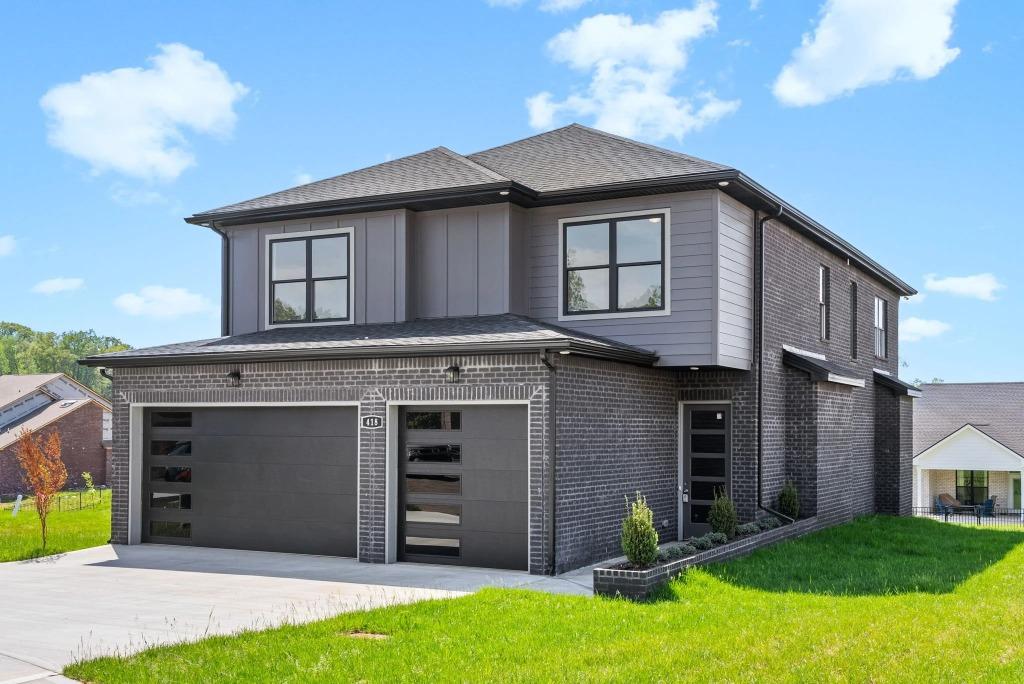
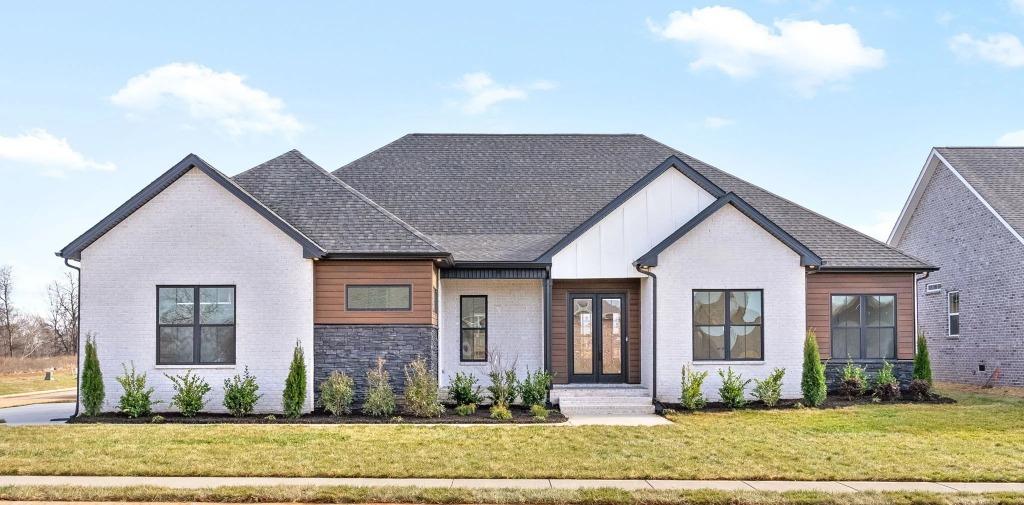
Modern farmhouse architecture borrows its bones from classic American farmhouses — gabled rooflines, deep porches, simple facades — and updates them with contemporary materials, open floor plans, and clean detailing. The result feels both familiar and brand new.
The exterior elements that define the style:
- Wrap-around or full-width front porches with simple or tapered columns and metal roof accents
- Board-and-batten siding, often paired with brick or stone at the base
- Black-framed windows for crisp contrast against light or mid-tone exteriors
- Standing-seam metal roof accents over porches, dormers, or bay windows
- Simple, steep gable rooflines that echo traditional barn and farmhouse silhouettes
What It Looks Like in a Real Plan: The Harmony
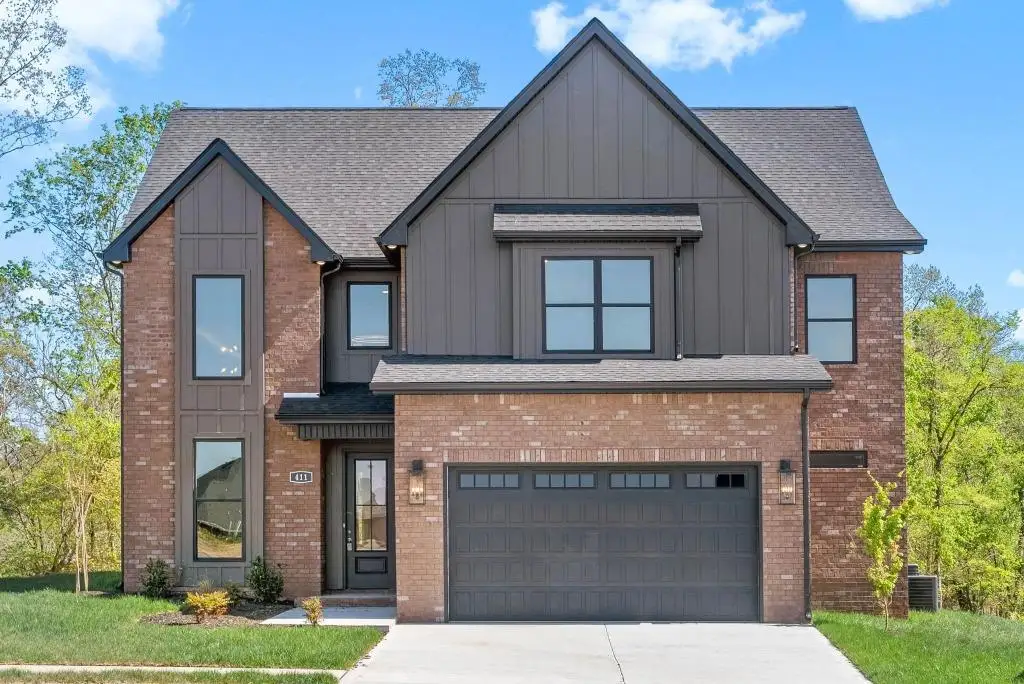
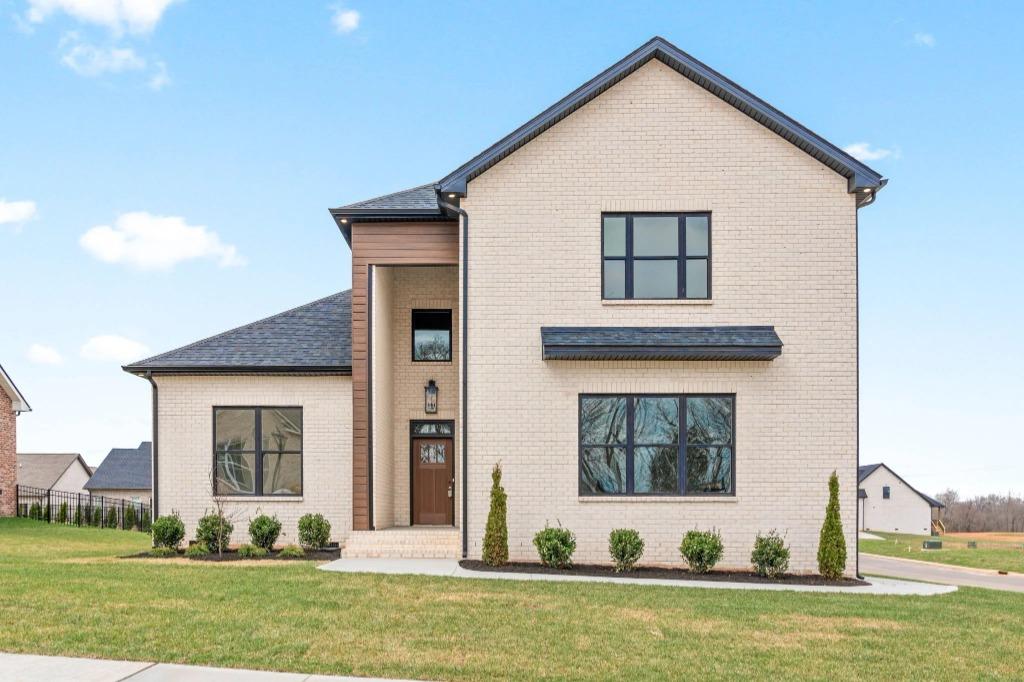
Our Harmony floor plan is a good example of the style done with restraint: board-and-batten gables over a full brick base, black-framed windows, and clean lines without fussy trim. Inside, it's a four-bedroom, three-and-a-half-bath layout starting at 2,860 square feet, with a gourmet kitchen and a primary suite designed as a retreat. It shows how the farmhouse look works on a suburban lot just as well as it does on acreage.
Interior Features That Bring the Style Home
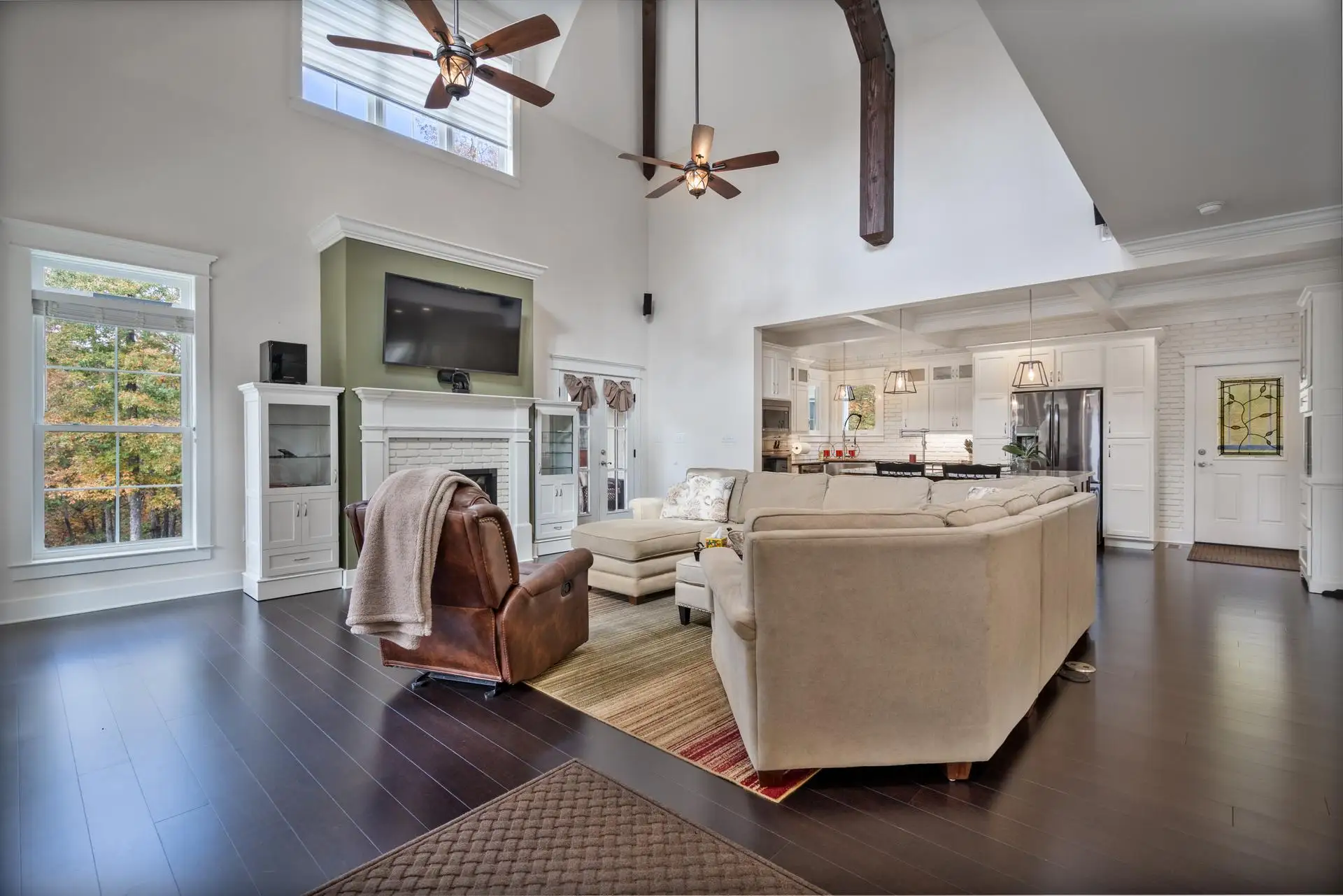
The farmhouse aesthetic doesn't stop at the front door. Inside, vaulted ceilings, exposed wood beams, and natural textures carry the exterior character through the home. Popular selections include:
- Vaulted great rooms with exposed beams as a focal point
- Oversized kitchen islands built for both meal prep and everyday gathering
- Apron-front sinks paired with quartz or butcher-block countertops
- Wide-plank engineered hardwood flooring for durability and warmth
- Mudrooms and drop zones designed for active, growing families
Materials That Hold Up in Middle Tennessee's Climate
Here's where the style lives or dies. Middle Tennessee's humidity, summer sun, and freeze-thaw winters are hard on exactly the materials that make a farmhouse look like a farmhouse.
- Siding: Real wood board-and-batten is beautiful and high-maintenance in humid summers. Fiber-cement board-and-batten gives you the same lines with far less risk of rot and paint failure, which is why it's the default choice for most new builds here.
- A masonry base: Brick or stone along the bottom of the walls keeps siding out of the splash zone, where rain and lawn sprinklers do the most damage. It's practical, not just decorative.
- Black windows: Dark frames absorb a lot of heat on south- and west-facing walls. Ask whether the window line you're choosing is rated for dark exterior colors — not every frame material handles it equally.
- Metal roof accents: Concealed-fastener standing-seam panels look cleaner and avoid the hundreds of exposed screws (and future leak points) of agricultural-style panels.
- Porch depth and orientation: A porch you'll actually use needs room for furniture and a walkway — about eight feet deep is a good target. A west-facing porch is brutal on July afternoons; on a lot with options, put the porch where it gets afternoon shade.
Where Modern Farmhouse Costs More (and Where It Saves)
Some of the style's signature moves add real cost: deep wrap-around porches, metal roofing, vaulted ceilings with beams (which also add volume to heat and cool), and large black-framed window walls. Others work in your favor. Simple gable rooflines and rectangular footprints are among the most cost-efficient ways to frame and roof a house. The best farmhouse designs spend on the porch and the great room and keep the rest of the structure simple.
Is Modern Farmhouse Still in Style?
The style is evolving rather than fading. The all-white, shiplap-everywhere look of a few years ago is giving way to a warmer version: natural wood tones, warm whites and earthy colors instead of stark gray, mixed metals, and fewer "farmhouse" signs and accents. The architecture underneath — gables, porches, board-and-batten, black windows — remains a durable choice, which matters for resale as much as for daily living. Keep the bones classic and let finishes carry the trends, since finishes are easier to change later.
Why Modern Farmhouse Works So Well in Middle Tennessee
Middle Tennessee's landscape — open pastureland, mature hardwoods, and wide lots outside the city core — suits this style naturally. A modern farmhouse sits as comfortably on five wooded acres as it does in a Clarksville subdivision. If acreage is part of your plan, read our guide to buying land to build a house in Tennessee before you make an offer, or explore the wooded homesites at Rustic Pines at Paris Landing.
Frequently Asked Questions
What is a modern farmhouse style home?
A modern farmhouse pairs traditional farmhouse forms — gabled roofs, deep porches, board-and-batten siding — with contemporary materials, black-framed windows, open floor plans, and clean detailing.
Is modern farmhouse still in style in 2026?
Yes, though it's evolving. The architecture remains popular, while interiors are shifting from stark white and gray toward warmer wood tones, earthy colors, and mixed metals.
What siding is best for a modern farmhouse in Tennessee?
Fiber-cement board-and-batten is the most practical choice for Middle Tennessee's humidity. It holds paint well, resists rot and insects, and gives the same look as wood with far less maintenance. A brick or stone base adds protection where rain splashes.
How deep should a farmhouse front porch be?
About eight feet deep is a good target for a porch you'll actually furnish and use. Shallower porches look right from the street but don't leave room for seating and a walkway.
Ready to design your own modern farmhouse? Contact Homefront Builders to talk through your plan, browse our floor plans and current builds, or see which luxury custom home features our clients say are worth every penny.